Choosing the 2026 Best Strap Sealing Machine for Global Buyers requires more than comparing catalog prices. Packaging lines now face changing product weights, tighter delivery schedules, and stronger sustainability expectations. The right machine must match strap material, package geometry, sealing method, and daily workload.
Industry data supports this practical approach. Smithers’ packaging market research highlights continued demand for efficient, automated, and resource-conscious packaging systems. PMMI reports also identify labor shortages, equipment flexibility, and reliable automation as major investment drivers for packaging manufacturers. These findings matter on the factory floor. A machine that seals 25 cartons per minute may still disappoint if its tension control damages thin PET strap or its heater needs frequent replacement.
Performance comes first. Check sealing consistency, cycle time, motor quality, spare-part access, and operator safety. For international buyers, confirm electrical compatibility, technical documentation, warranty terms, and compliance with applicable regional standards. Local service capability can be decisive. A small sensor fault should not stop a container-loading schedule for two weeks.
No machine wins every test. That is the uncomfortable part. A low-cost Strap Sealing Machine may suit a small warehouse, while a servo-controlled model better serves continuous export packaging. Buyers should request sample trials using real cartons, actual strap widths, and expected production speeds. Measure seal strength, noise, rejected packages, and energy use.
Reports from Smithers and PMMI provide useful market direction, but they cannot replace hands-on validation. The best 2026 choice is the machine that performs reliably in your specific environment, not the model with the most impressive brochure.
What Is a Strap Sealing Machine and How Does It Work?
2026 Best Strap Sealing Machine for Global Buyers?
What Is a Strap Sealing Machine and How Does It Work?
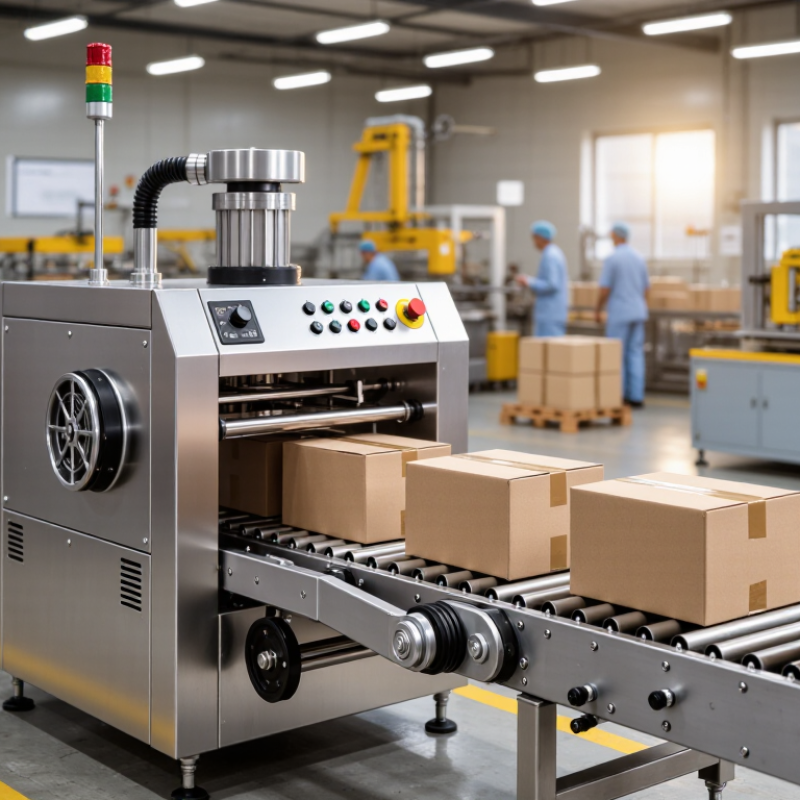
A strap sealing machine secures cartons, bundles, and pallet loads with plastic strapping. It feeds the strap around a package, tightens it, seals the joint, and cuts the excess. The process usually takes seconds. The result is a compact load that handles storage and transport more safely.
Most machines use polypropylene or polyester strap. A tension motor pulls the strap firmly around the load. A heating blade, friction system, or ultrasonic unit then joins the overlapping ends. The operator places a carton on the table, guides the strap through the channel, and starts the cycle. Sensors control position and timing. Incorrect tension can crush soft cartons. Low tension can leave movement inside the load.
Market data shows why this equipment matters. Smithers’ The Future of Packaging to 2028 estimates the global packaging market will exceed 1.2 trillion dollars by 2028. PMMI industry reports also identify automation and labor efficiency as continuing packaging priorities. These figures support investment, but they do not guarantee the right machine.
Buyers should test actual cartons before ordering. Check strap width, seal strength, cycle speed, electrical standards, and spare-part access. A humid warehouse may need different settings than a dry workshop. I have seen operators focus on speed and overlook strap alignment. That mistake creates weak seals. Manual models suit lower volumes, while automatic systems reduce repetitive handling. The better choice depends on load shape, daily cycles, and operator skill.
Main Types of Strap Sealing Machines for Different Packaging Needs
Main Types of Strap Sealing Machines for Different Packaging Needs
Choosing the best strap sealing machine in 2026 starts with the package, not the machine. Semi-automatic models suit small warehouses, furniture shipments, and occasional carton sealing. Operators position the strap, then start the cycle. They cost less and need limited floor space. Automatic machines fit regular carton lines. They feed, tension, seal, and cut the strap with less manual handling. Fully automatic systems connect with conveyors and pallet lines. They serve distribution centers with steady throughput.
Heat-sealing models commonly use polypropylene or polyester strap. Polypropylene works well for light cartons and flexible loads. Polyester provides stronger tension for bricks, timber, and heavier pallets. Friction-welding systems produce consistent seals without direct heating. They can reduce waiting time between cycles. Smithers estimates the global packaging market will approach US$1.3 trillion by 2028, showing why scalable equipment matters. PMMI’s 2024 industry reporting also highlights labor shortages and automation as major investment drivers. Still, faster is not always better. Poor strap alignment can damage cartons and create weak seals. I have seen impressive machines fail because the load itself was unstable.
Tips: Measure daily packages, strap width, load weight, and operator skill before buying. Test real cartons, not samples only. Check seal strength after vibration and corner impacts. Leave room for maintenance access. A compact machine may look efficient, but restricted access becomes expensive. Also review spare-part availability and training support. These details are easy to overlook.
Key Features to Compare When Choosing a Machine in 2026
2026 Best Strap Sealing Machine for Global Buyers?
When comparing strap sealing machines in 2026, buyers should examine real output, not only advertised speed. Smithers forecasts the global packaging market will exceed 1.2 trillion dollars by 2028. That growth increases pressure on reliable secondary packaging equipment. A practical machine should support common polypropylene and polyester strap widths. It should also provide adjustable tension, stable heating, and consistent seal strength. Ask for test results using your actual cartons. Catalog samples can be misleading.
Cycle time matters. However, higher speed is useless when operators frequently correct misaligned straps. Check the complete cycle, including feeding, tensioning, sealing, and cutting. PMMI’s State of the Industry research places U.S. packaging machinery shipments above 10 billion dollars annually, reflecting continued automation investment. Buyers should compare labor savings against maintenance costs. Look for tool-free access, clear fault codes, and sensors that detect strap shortages. Energy use deserves attention too. Pneumatic systems may require more infrastructure than expected.
For global purchasing, electrical compatibility and remote support are essential. Confirm voltage, frequency, guarding standards, and spare-parts availability before payment. A durable frame helps in dusty warehouses, but it does not solve poor operator training. I would also request a 24-hour endurance test. One short demonstration proves little. Machine selection is still imperfect because carton sizes, strap quality, and working habits vary. The cheapest option may become expensive after repeated seal failures.
Global Buyer Requirements: Power, Standards, Safety, and Support
2026 Best Strap Sealing Machine for Global Buyers?
Global Buyer Requirements: Power, Standards, Safety, and Support
A strap sealing machine must match the buyer’s power network, not just the product catalog. Voltage, frequency, phase, plug format, and starting current should be confirmed before shipment. The International Energy Agency’s Energy Efficiency 2024 report estimates that motor-driven systems use about half of global electricity. Efficient motors and standby controls therefore matter during long production shifts. A small error here can cause costly downtime.
Standards require practical attention. ISO 12100 supports machine risk assessment, while IEC 60204-1 addresses electrical equipment safety. Buyers serving Europe should also prepare for Regulation (EU) 2023/1230, which applies from January 20, 2027. Other markets may require local electrical approvals or guarding rules, including OSHA requirements in the United States. Compliance documents should include wiring diagrams, test records, manuals, and declarations. Paperwork is part of the machine.
Safety details deserve inspection. Look for accessible emergency stops, guarded moving parts, stable tension control, and heat protection around sealing areas. PMMI’s 2024 State of the Industry report identifies labor availability and automation as continuing packaging priorities. Simple controls help operators work consistently. Training should cover strap loading, blade replacement, cleaning, and fault recovery. Support often decides real performance. Ask about spare-part lead times, remote diagnosis, service languages, and technician availability. A perfect specification can still fail in a remote warehouse. Specifications still get missed.
2026 Best Strap Sealing Machine for Global Buyers
Global buyer requirements: power compatibility, standards, safety, and after-sales support
Power compatibility
Confirm the machine voltage, frequency, plug type, phase, and allowable tolerance before shipment. Brazil commonly uses 127 V or 220 V, while Japan uses 100 V with regional frequency differences.
Applicable standards
Review IEC 60204-1 for electrical equipment of machinery, ISO 12100 for risk assessment, IEC 60529 for enclosure protection, and the destination market’s conformity requirements.
Safety priorities
Look for guarded heating and sealing areas, emergency stopping provisions where required, stable tension control, electrical protection, clear warnings, and accessible maintenance points.
Support package
A professional supply package should include an English manual, wiring diagram, spare-parts list, troubleshooting guidance, operator training, and defined response times for technical support.
Voltage figures show common nominal supply values. Local electrical codes and site conditions should always be verified before installation.
How to Evaluate Suppliers, Costs, Maintenance, and Long-Term Value
2026 Best Strap Sealing Machine for Global Buyers?
Supplier evaluation should begin with production evidence, not glossy specifications. Ask for a factory test using your actual strap width, package weight, and sealing temperature. Request cycle-time records, reject rates, electrical drawings, and maintenance manuals. Ask for proof.
PMMI’s 2024 State of the Industry report places U.S. packaging machinery shipments above 10 billion dollars annually. This scale reflects strong automation demand, but it also increases supplier competition. Compare response times, spare-part availability, technician coverage, training, and warranty exclusions. A low purchase price may hide expensive international freight, import fees, setup labor, and long waits for heating elements or cutters. Downtime hurts.
Calculate total cost over five years. Include electricity, consumables, planned service, operator training, and estimated production losses. The International Energy Agency reports that electric motors consume about half of global electricity, so efficient drives deserve attention. However, a strap sealing machine normally loses more value through stoppages than through small energy differences. Check sealing consistency after continuous operation, especially near shift changes. Inspect belts, guides, heaters, sensors, and control panels during a live demonstration.
Maintenance design matters. Tool-free access, standard components, clear fault codes, and recorded service intervals reduce dependence on one technician. I would still challenge optimistic supplier payback claims. They often assume perfect utilization and zero learning time. Use your real hourly output and reject data. A cheaper machine can win on paper, then fail commercially when parts arrive slowly or operators improvise repairs. Safety documentation, electrical conformity, and traceable test records should be treated as purchase requirements, not optional paperwork.
FAQS
A semi-automatic machine often suits occasional carton sealing. The operator positions the strap and starts the cycle. It needs limited floor space. Lower cost helps smaller operations. Measure the workload first.
Automatic machines suit regular carton lines with steady daily output. They feed, tension, seal, and cut the strap. Operators handle fewer manual steps. Check complete cycle time, not only advertised speed. Fast is not always better.
Polypropylene suits light cartons and flexible loads. Polyester provides stronger tension for bricks, timber, and heavier pallets. The load decides the material. A stronger strap cannot fix an unstable package.
Test the machine with actual cartons and normal strap widths. Catalog samples can hide alignment problems. Check feeding, tensioning, sealing, and cutting together. Inspect seals after vibration and corner impacts. One short demonstration proves little.
Confirm voltage, frequency, phase, plug format, and starting current. The machine must match the local power network. Ask about energy use during long shifts. Incorrect electrical details can cause expensive downtime. Small errors matter.
Look for accessible emergency stops and guarded moving parts. Stable tension control helps prevent sudden strap movement. Heat protection should cover sealing areas. Controls should be clear for new operators. Safety paperwork is not enough.
Ask about spare-part lead times and remote diagnosis. Confirm service languages and technician availability. Check whether operators can access parts without special tools. Training should cover loading, cleaning, blade replacement, and fault recovery. Support may decide performance.
Not necessarily. Repeated seal failures can make a cheap machine expensive. Poor access can also increase maintenance time. Compare labor savings, energy use, repair costs, and downtime. I would test endurance before deciding.
Conclusion
A Strap Sealing Machine is designed to secure packages by tightening and sealing plastic or metal straps around cartons, pallets, and other loads. Depending on packaging volume and product type, buyers can choose manual, semi-automatic, automatic, or fully integrated systems. Each option offers different levels of speed, labor efficiency, flexibility, and automation, making it important to match the machine with daily workload, package dimensions, and material requirements.
For global buyers in 2026, key considerations include sealing strength, operating speed, adjustment range, energy efficiency, safety protection, and ease of maintenance. Power compatibility, applicable technical standards, reliable spare-part supply, training, and after-sales support are also essential for international operation. A careful supplier evaluation should compare the total cost of ownership rather than only the purchase price, including installation, consumables, maintenance, downtime, and expected service life. The best choice is a dependable Strap Sealing Machine that delivers consistent performance, safe operation, and long-term value across changing packaging demands.

 Handpack