Choosing the right Metal Banding Tool is a practical decision, not a catalogue exercise. The wrong tool can leave loose seals, damaged edges, or operator fatigue. A warehouse floor makes these weaknesses visible quickly. Steel coils, pipes, and heavy pallets demand different tension, sealing, and cutting performance.
Industry data supports careful selection. The Packaging Machinery Manufacturers Institute (PMMI) reports that labor availability and equipment usability remain major packaging concerns. Smithers’ packaging forecasts also show continuing investment in automation, productivity, and material efficiency. These trends matter because a Metal Banding Tool affects more than strap closure. It influences cycle time, worker effort, maintenance, and load stability. However, broad market data cannot choose your exact tool. Your band width, steel grade, package shape, and daily volume still decide the outcome.
Packaging engineer and author Dr. Susan Selke has stated, “Packaging must protect the product, not merely contain it.” That principle applies directly here. A strong tool should control the band without crushing corners or creating unsafe recoil. Pneumatic models may suit continuous production. Battery-powered tools can improve mobility. Manual tools may remain sensible for occasional work. Not every expensive option is better. A neat checklist can still mislead. Test the tool on real loads, inspect seal consistency, and measure operator comfort. Reliable selection comes from evidence, not impressive specifications.
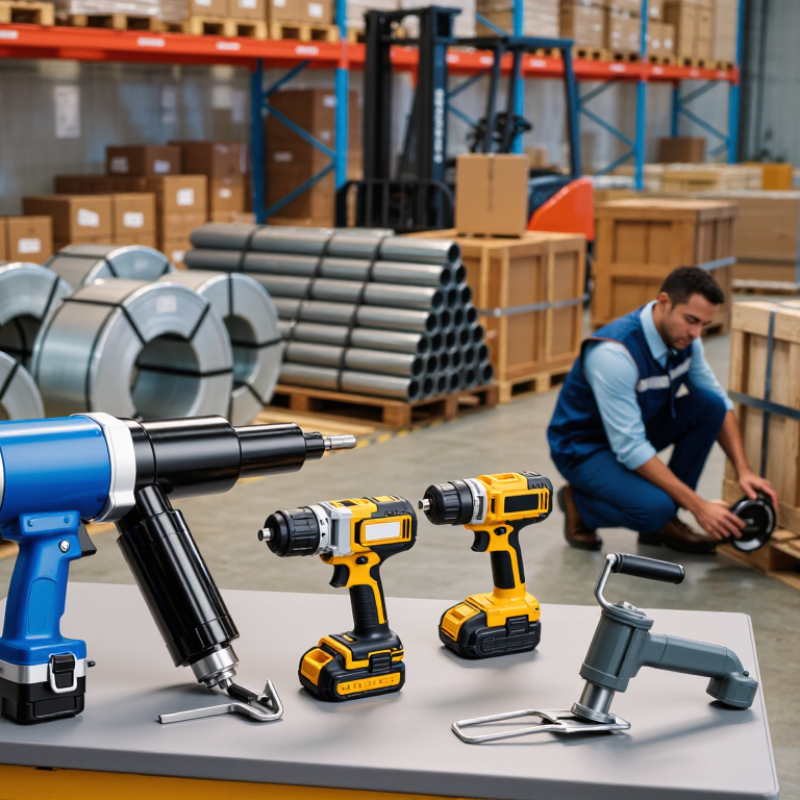
Choosing the right metal banding tool begins with the load, not the tool’s appearance. Steel banding secures coils, pipes, timber, bricks, and heavy pallets. The World Steel Association reported 1.89 billion tonnes of crude steel production in 2023. That scale reflects the demanding environments where reliable securing matters.
Manual tools suit occasional packing and lighter loads. Pneumatic tensioners provide consistent force for repetitive work. Battery-powered models improve mobility around warehouses and outdoor yards. Match the tool with band width, thickness, tensile strength, and joint type. Excessive tension can crush cartons or deform timber. Insufficient tension allows shifting during transport. MHI’s 2024 Annual Industry Report found that 55% of surveyed supply-chain leaders planned to increase technology investment. Automation is growing, but simple tools still require judgement. The cheapest option may appear practical. It often is not.
Tips: Check the tool’s tension range against the band specification. Test one secured load before full production. Inspect seals, cutters, and tensioning parts daily. Keep hands away from the strap path and wear suitable eye and hand protection. Record failed joints and review the pattern. A tool may be blamed unfairly when the band, seal, or operator technique is the real problem. Calibration is easy to overlook. That deserves more attention.
Choosing a banding tool starts with the material, not the tool’s appearance. Steel banding needs strong tension and reliable sealing. Manual tools suit occasional packing and smaller workloads. Pneumatic or battery-powered tools perform better in busy packing areas. They reduce operator fatigue during repeated cycles.
Polyester banding needs controlled tension because excessive force can damage its surface. A friction-welding tool can create a clean joint without metal seals. Polypropylene works well for lightweight cartons and flexible packages. It usually needs less tension and a lighter tool. Always check the band width and thickness before selecting the tool. Small differences matter.
Package design also changes the decision. Heavy coils, timber, and machinery require high tension and durable seals. Fragile cartons need softer handling around corners. Use edge protectors when banding may crush the box. A narrow package may need a compact tool with better access. A large pallet may need longer battery life or an air supply. Not every powerful tool is suitable. Higher tension is not automatically better.
In practical inspections, operators often focus on speed and overlook joint quality. Test several sealed packages before full production. Pull the band by hand. Inspect slipping, cuts, and uneven tension. I have seen well-packed loads fail because the tool matched the material but not the package shape. That mistake is easy to repeat. Record the settings, then adjust them after real handling tests.
How to Choose the Right Metal Banding Tool?
Choosing a metal banding tool starts with understanding the load, strap width, and working environment. Tensioning capacity matters, but maximum force is not always the best choice. Excessive tension can deform cartons, damage edges, or weaken the strap. A reliable tool should provide steady tension with clear feedback from its handle or indicator. In practical use, I check whether the strap stays firm after several minutes. That small test often reveals slipping problems.
The sealing mechanism must match the joint style and production pace. A seal-and-crimp system suits repeated packing, while a buckle system may offer easier adjustment in field work. Inspect the cut-off mechanism carefully. A clean cut should leave no sharp, loose edge near the operator’s hands. Cutting effort also matters when using thicker steel strap. If the handle feels rough, alignment may already be poor. I once focused too much on tension ratings and overlooked grip comfort. That was a costly oversight during a long shift.
Tips: Test the tool with your actual strap before purchase. Measure the finished joint, not only the tension setting. Look for balanced handles, visible moving parts, and simple maintenance access. Keep the tool stable against the package surface. A rushed operation can create uneven seals. Also, review spare-part availability and operator training needs. Fancy mechanisms are not always practical.
How to Choose the Right Metal Banding Tool?
Manual, pneumatic, battery-powered, and automatic banding tools suit different production realities. Manual tools are inexpensive, portable, and useful for occasional pallet work. They also demand repeated squeezing and tensioning, which can fatigue an operator after a long shift. The NIOSH Revised Lifting Equation sets a 51-pound load constant under ideal lifting conditions; it does not measure hand fatigue, but it reminds buyers that “light duty” is not always harmless.
Pneumatic tools deliver consistent tension with less hand effort. They work well beside fixed air lines, although compressors add noise, maintenance, and energy use. Battery-powered tools remove the hose and improve movement around irregular loads. Their limits are charging time, battery weight, and performance in cold warehouses. In my experience, a battery model feels efficient until several operators share too few spare batteries. That detail is easy to miss.
Automatic systems fit high-volume lines with repeatable package sizes. The International Federation of Robotics reported 541,302 industrial robot installations worldwide in 2023, showing how strongly manufacturers are investing in automation. However, that trend does not make automation suitable for every site. PMMI’s 2024 industry outlook also identified labor availability and automation as major packaging concerns. Measure daily bundles, band width, required tension, air access, and changeover time before choosing. A slower manual process may still win for mixed loads. Mistakes happen. Keep the trial practical.
Comparing Manual, Pneumatic, Battery-Powered, and Automatic Models
The chart compares typical strapping cycle time per strap. Manual tools are economical and portable but require more operator effort. Pneumatic tools provide faster, consistent tension where compressed air is available. Battery-powered tools offer a balance of mobility, speed, and tension control. Automatic machines deliver the shortest cycle time and are best suited to high-volume packaging lines.
Choosing the right metal banding tool requires more than comparing purchase prices. Examine the frame, tensioning mechanism, and cutting assembly for repeated industrial use. Reinforced housing and replaceable wear parts usually indicate better durability. Ask for cycle-test results, not vague claims. I once trusted a heavy-looking tool that developed trigger problems within months. Weight alone proves little.
Safety deserves practical attention. Look for controlled tension release, a protected cutter, non-slip grips, and a trigger that prevents accidental activation. ISO 12100 recommends identifying hazards throughout a machine’s design and operating life. The U.S. Bureau of Labor Statistics also continues to list overexertion and bodily reaction among major causes of workplace injuries. A tool that reduces wrist twisting may therefore protect productivity and people. Still, no safety feature replaces trained handling.
Maintenance affects the real cost. Check whether cleaning points are accessible, lubrication instructions are clear, and spare parts remain available. The U.S. Department of Energy’s O&M Best Practices Guide reports that preventive maintenance can save 12–18% compared with reactive maintenance. Record tension accuracy, blade wear, battery performance, and repair frequency. A lower-priced tool may become expensive after repeated downtime. Yet the most expensive option is not automatically the best; some specifications look impressive but add little value in your actual workflow. Test the tool on your banding material, measure operator fatigue, and calculate cost per completed package.
| Tool Type | Typical Banding Material | Typical Tension Capability | Durability Considerations | Key Safety Features | Routine Maintenance | Typical Purchase Cost | Best Suited For | Overall Value |
|---|---|---|---|---|---|---|---|---|
| Manual Tensioner with Seals | Regular-duty steel or stainless-steel band | Approximately 500–1,000 kgf, depending on operator force and tool design | Simple mechanical construction; fewer components can reduce breakdown risk. Wear is concentrated on the gripper, cutter, and windlass. | Integral band cutter, guarded cutting area, non-slip handle, and controlled release mechanism | Remove metal fragments, inspect the gripper and cutter, lubricate pivot points, and check fasteners regularly. | Approximately US$80–250 | Low- to medium-volume packaging, field work, and locations without compressed air or charging facilities | High for occasional use |
| Manual Combination Tool | Steel band with sealless joint formation | Approximately 400–900 kgf, depending on band width and operator strength | Robust when made with hardened steel components; joint-forming parts may wear faster in high-volume applications. | Protected cutting edge, positive locking mechanism, stable base, and handle with slip-resistant grip | Clean the crimping area, inspect forming jaws, remove burrs, and apply light lubricant to moving joints. | Approximately US$150–450 | Workshops and warehouses requiring a compact tool with no separate seals | Good for flexible operations |
| Pneumatic Tensioner | Heavy-duty steel band | Approximately 700–1,500 kgf, depending on air pressure and model | Suitable for repeated use when supplied with clean, regulated air. Pneumatic motors and seals require periodic servicing. | Trigger lock or dead-man control, guarded cutter, exhaust muffler, secure air fittings, and hose restraints | Drain the air line, use an appropriate air filter and lubricator, inspect hoses, and check fittings for leaks. | Approximately US$700–1,800 | High-volume production areas with an established compressed-air system | High for continuous use |
| Pneumatic Combination Tool | Steel band with sealless joint formation | Approximately 600–1,300 kgf, depending on air pressure and band specification | Reduces manual effort and separate sealing steps; forming jaws need inspection because they directly create the joint. | Two-stage trigger, guarded crimping zone, automatic or controlled release, and protected cutting mechanism | Clean and lubricate the air system, inspect crimping jaws, check hose integrity, and verify joint quality. | Approximately US$900–2,200 | Production lines that need consistent joints and reduced operator fatigue | Very good for repetitive work |
| Battery-Powered Tensioner with Sealer | Steel or stainless-steel band | Approximately 700–1,200 kgf, depending on battery, band size, and setting | Brushless motor systems generally reduce routine servicing; battery and drive components determine long-term operating life. | Trigger lock, guarded cutter, adjustable tension control, battery protection, and automatic stop or release function | Charge and store batteries correctly, clean the tensioning head, inspect the cutter, and keep ventilation openings clear. | Approximately US$1,200–3,000 | Mobile operations, outdoor packaging, and facilities without compressed air | High for mobility |
| Battery-Powered Combination Tool | Steel band with sealless joint formation | Approximately 600–1,100 kgf, depending on the selected tension setting | Provides repeatable cycles but includes more electronic and battery-related components than manual tools. | Soft-start trigger, overload protection, guarded cutter and crimping area, automatic tension cutoff, and battery status indicator | Inspect the drive wheel and forming jaws, clean band residue, maintain batteries, and follow the charging cycle recommended by the manufacturer. | Approximately US$1,500–3,500 | High-throughput, mobile, or ergonomics-focused applications requiring consistent seals | Excellent when productivity is critical |
Start with the load, not the tool’s appearance. Check band width, thickness, strength, and joint type. Test one secured pallet before full production.
Manual tools suit occasional packing, lighter loads, and mixed pallets. They are portable and affordable. Repeated squeezing can fatigue hands during long shifts.
Pneumatic tools provide steady tension with less hand effort. They suit repetitive work near fixed air lines. Compressors add noise, maintenance, and energy use.
Yes. They remove hoses and improve movement around irregular loads. Check charging time, battery weight, and cold-weather performance. Too few spare batteries can slow everyone down.
Automatic systems fit high-volume lines with consistent package sizes. They may perform poorly with mixed loads or frequent changeovers. Measure daily bundles first.
Excessive tension can crush cartons or deform timber. Insufficient tension allows loads to shift during transport. Adjust tension to the material, not personal habit.
Look for controlled tension release, protected cutters, non-slip grips, and an activation lock. Keep hands away from the strap path. Wear eye and hand protection.
Inspect seals, cutters, and tensioning parts daily. Clean accessible areas and follow lubrication instructions. Record blade wear, tension accuracy, repairs, and battery performance.
Not always. Calculate cost per completed package, including downtime and repairs. A heavy-looking tool can still fail early. I have trusted appearance too much before.
Review the band, seal, tool, and operator technique together. Record failure patterns. The tool may receive blame unfairly. Calibration is easy to overlook.
Choosing the right Metal Banding Tool begins with understanding the work it must perform. Consider the type of metal banding material, the size and shape of the package, the required tension, and the sealing method. Different applications may call for tools designed for light-duty bundles, heavy industrial loads, flat surfaces, or irregular packages. It is also important to evaluate how the tool tightens, seals, and cuts the band, since these functions affect package security, efficiency, and consistency.
Metal banding tools are available in manual, pneumatic, battery-powered, and automatic models. Manual tools are practical for occasional use, while powered or automatic options can improve productivity in demanding operations. Before making a decision, compare tool durability, ease of handling, operator safety features, maintenance requirements, replacement-part availability, and total cost. The best choice should provide reliable performance without being unnecessarily complex, helping users achieve secure packaging and efficient daily operation.

Handpack