Global buyers rarely choose a Plastic Strap Sealer by price alone. Production speed, strap material, package shape, maintenance access, and operator training can change the final result. A machine sealing cartons in a dry warehouse may perform differently beside a humid loading dock. Small details matter. So does the application.
Packaging machinery specialist Mike O’Donnell says, “A reliable sealer must match the strap, the package, and the working environment.” This practical view gives buyers a useful starting point. Heat sealers suit many polypropylene and polyester strap applications. Friction welders can deliver strong joints without external heating elements. Pneumatic and automatic models support higher production volumes. Handheld tools remain valuable for varied package sizes and mobile work.
This guide compares the top types of Plastic Strap Sealer equipment for international purchasing teams. It considers sealing method, throughput, compatibility, safety features, service requirements, and total operating cost. A fast machine is not always the best machine. An inexpensive unit may require frequent adjustments. That can interrupt a busy line.
There is no universal winner. Buyers should test real strap samples, measure joint strength, and review local service support before ordering. They should also question supplier claims. Some specifications look impressive but reveal little about daily performance. A careful trial may expose weaknesses early. That step takes time, but replacing unsuitable equipment takes longer. The following sections examine common sealer types and explain where each option fits.
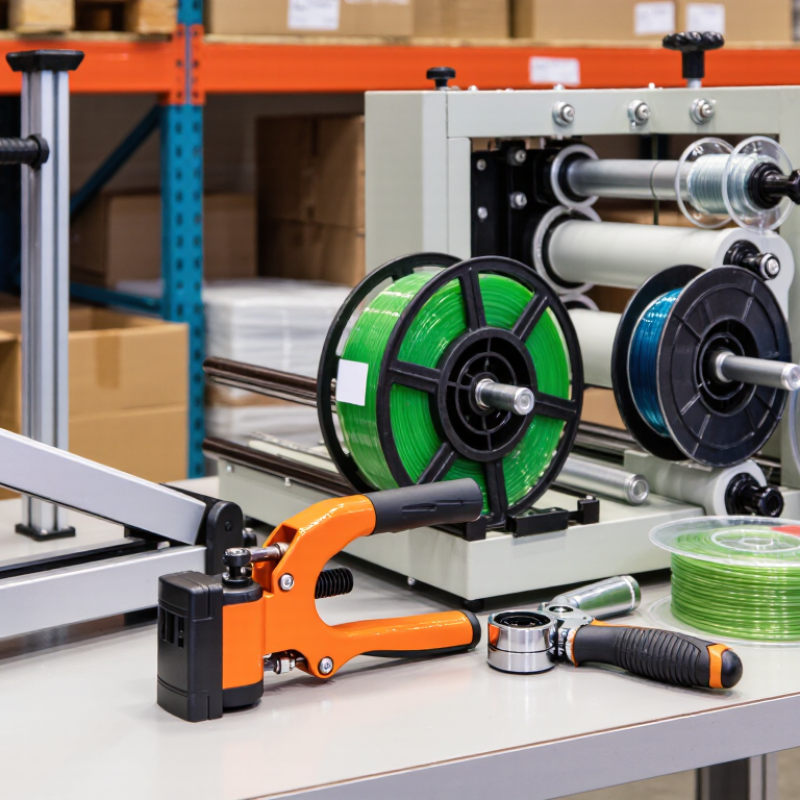
Manual heat sealers are a practical choice for PP straps in small warehouses, export packing areas, and repair stations. They commonly handle strap widths from 9 to 19 mm. This range suits cartons, bundled pipes, wooden cases, and light pallets.
Temperature control matters more than appearance. A setting between 180°C and 260°C can support different PP strap thicknesses and surface conditions. Start near the lower range, then increase gradually when the seal looks weak. The strap should soften at the joint, not burn or curl sharply. A clean sealing blade also prevents dark marks and uneven bonding.
I have found that operator pressure affects results as much as heat. Hold both strap ends straight and keep the overlap flat. Wait briefly after sealing before moving the package. This small pause improves joint stability. Manual tools are slower than automated systems, but they offer direct control and easier maintenance. They also work where electricity, floor space, or production volume is limited.
Do not trust temperature numbers alone. Actual heat can vary with airflow, wear, and supply voltage. Check several sealed samples before regular packing. One sample may look perfect by chance. Gloves, eye protection, and a clear work area reduce handling risks. I still see buyers overlook blade cleaning, especially in dusty environments. That mistake can create unreliable seals and unnecessary strap waste.
This chart shows the common PP strap widths covered by manual heat sealers and the 180–260°C operating-temperature envelope stated for this product category. Actual settings should be adjusted according to strap thickness, material formulation, ambient conditions, and sealing speed.
Pneumatic sealers for PET straps support demanding packing lines where stable tension and fast cycles matter. They commonly deliver 400–800 N of tension, depending on strap width, thickness, and air pressure. This range can secure heavy cartons, timber bundles, and palletized materials without excessive strap stretching. Speed matters. Experienced operators can tension, seal, and cut each strap within one controlled cycle. However, published tension ratings are not universal. Actual performance changes with air supply, strap quality, and operator technique.
Tips: Match the sealer with your PET strap specifications before purchasing. Check the required air pressure and compressor capacity. Use clean, dry compressed air to protect internal components. Measure real tension during trials, rather than trusting settings alone. Inspect seal width and joint strength after repeated cycles. Small errors matter.
Global buyers should request testing with their actual load shape and packaging conditions. A practical trial should record cycle time, tension consistency, seal quality, and operator fatigue.
Look for adjustable regulators, clear gauges, replaceable wear parts, and accessible maintenance points. Even a well-rated pneumatic sealer may perform poorly with a weak air line or uneven pallets. That is easy to overlook. Periodic jaw inspection also prevents slipping and incomplete seals. Safety training remains essential, especially in high-throughput areas where rushed handling can create inconsistent results.
Friction-weld strap sealers suit high-volume packaging lines using 13–19 mm polypropylene (PP) or polyethylene terephthalate (PET) strap. A typical weld cycle takes about 2–4 seconds, depending on strap width, tension, and operator handling. The vibrating jaw heats the strap surfaces through friction, then compresses them into a compact joint. PET usually needs firmer tension control, while PP can react more noticeably to excessive heat.
The OECD’s Global Plastics Outlook reports that plastic waste reached 353 million tonnes in 2019, with packaging among the largest waste sources. This makes reliable sealing important, but sealing alone cannot solve packaging waste. PlasticsEurope reported global plastics production of about 400.3 million tonnes in 2022. Buyers should therefore check strap weight, recycled content, and joint strength, not only machine speed. In practice, a claimed four-second cycle may slow when workers reposition uneven cartons. That detail is easy to overlook.
Tips: Test both strap materials with real cartons. Measure seal strength after cooling, not immediately. Check jaw wear every shift. A clean weld is not always a strong weld. Loose alignment can create a polished but weak joint. Keep spare heating and tension components available, especially on continuous export lines.
Global buyers usually compare heat, friction, and ultrasonic plastic strap sealers. Ultrasonic models operate at 20–40 kHz and create localized vibration between the strap and anvil. This concentrates energy at the joint, limiting heat exposure around the package. That matters for coated cartons, thin films, and products sensitive to surface distortion. Weld time, horn pressure, strap tension, and material composition still control seal quality.
Smithers’ 2024 flexible packaging market research highlights continuing demand for lighter, more resource-efficient packaging systems. The Flexible Packaging Association reported approximately 39.8 billion dollars in U.S. flexible packaging sales for 2023. These figures support interest in precise sealing equipment, although strap sealers serve only a smaller part of that market. Ultrasonic systems can offer clean welds and low consumable waste, but they are not universally superior. Mixed materials, dusty surfaces, or poorly aligned straps can reduce weld strength.
Tips: Test the exact strap before purchasing. Record weld time, pressure, peel strength, and package temperature. A 30 kHz setting may suit one structure, while another needs 20 or 40 kHz. Ask suppliers for repeatability data, not only sample photos. In plant trials, operators sometimes change tension manually, creating inconsistent results. That practical weakness deserves attention. A strong machine can still produce unreliable seals when setup discipline is poor.
| Ultrasonic Sealer Type | Typical Operating Frequency | Compatible Strap Materials | Common Strap Width Range | Joint or Seal Configuration | Typical Sealing Cycle | Heat-Sensitive Packaging Suitability | Typical Applications |
|---|---|---|---|---|---|---|---|
| Handheld Ultrasonic Strap Sealer | 20–40 kHz | PP PET | 9–19 mm | Friction-free ultrasonic weld; usually designed for thermoplastic strap joints | Approximately 1–3 seconds, depending on strap material, tension, and equipment settings | Very suitable; localized energy reduces the need for heated sealing jaws | Low- to medium-volume cartons, bundled products, export packing, and mobile packing stations |
| Pneumatic Ultrasonic Strap Sealer | 20–35 kHz | PP PET | 12–19 mm | Ultrasonic weld activated by pneumatic clamping and tensioning | Approximately 1–2.5 seconds per joint | Very suitable for products that should not be exposed to open heat | Regular production lines, heavier cartons, palletized goods, and repetitive packaging work |
| Automatic Ultrasonic Strapping Machine | 20–30 kHz | PP PET | 5–19 mm, depending on machine design | Automatic strap feeding, tensioning, cutting, and ultrasonic welding | Typically 2–6 seconds per completed strap cycle | Suitable for sensitive packaged goods when surface contact and compression are controlled | Distribution centers, fulfillment operations, printing products, food cartons, and light industrial packaging |
| Tabletop Ultrasonic Strap Sealer | 30–40 kHz | PP PET | 5–16 mm | Compact ultrasonic weld head with manual or semi-automatic strap positioning | Approximately 1–3 seconds per seal | Suitable for small packages and products affected by thermal deformation | Small factories, retail packing, laboratory shipments, and short production runs |
| Servo-Controlled Ultrasonic Strap Sealer | 20–35 kHz | PP PET | 9–19 mm | Programmable tension and weld control for repeatable thermoplastic joints | Approximately 1–3 seconds per seal, depending on the programmed cycle | Highly suitable where consistent compression and limited heat exposure are required | Automated packaging cells, electronics packaging, medical-product cartons, and precision logistics |
| Multi-Head Ultrasonic Strapping System | 20–30 kHz per welding head | PP PET | 9–19 mm | Two or more synchronized ultrasonic weld heads for parallel or cross strapping | Approximately 3–8 seconds for a multi-strap sequence | Suitable for heat-sensitive loads when several straps must be applied efficiently | Large cartons, pallet stabilization, appliances, furniture components, and industrial bundles |
| Custom Integrated Ultrasonic Sealing Module | 20–40 kHz | PP PET | Application-specific; commonly 5–19 mm | Ultrasonic welding head integrated into a conveyor, robotic cell, or form-fill-packaging line | Application-specific; commonly 1–5 seconds per joint | Suitable when packaging must avoid conventional hot bars or heated sealing elements | Custom automation, high-throughput packaging, clean production areas, and specialized export packaging |
| Selection note: Actual performance depends on strap polymer grade, strap thickness, joint overlap, tension level, horn and anvil design, weld amplitude, packaging-line speed, and machine calibration. Frequency and cycle-time ranges shown are typical industry ranges rather than universal specifications. | |||||||
Automatic plastic strap sealers can reach up to 60 cycles per minute on suitable production lines. This speed supports carton plants, warehouses, and distribution centers with steady outbound volume. The actual rate depends on strap material, package size, tension settings, and operator loading. Speed alone is not enough.
Fully automatic systems usually include strap feeding, tensioning, heat sealing, cutting, and fault detection. Sensors can identify missing packages or poorly positioned straps before sealing. A well-adjusted machine keeps strap joints neat and consistent. In practical trials, clean guides and stable electrical power often matter more than advertised speed.
Maintenance remains important. Dust around the sealing head can reduce bonding quality and create unexpected stops. Operators should check strap alignment, heater temperature, and conveyor timing during each shift. Plastic strap types also require compatibility testing. Polypropylene and polyester do not always respond to identical settings. That detail is easy to overlook.
For global buyers, line integration deserves careful review. The sealer should match conveyor height, package flow, available floor space, and local safety requirements. Automatic operation reduces repetitive handling, but trained supervision is still necessary. A fast cycle may expose weak cartons or uneven loading. Slowing the line can sometimes improve total output. Mistakes happen. Reliable results come from measured trials, documented settings, and realistic production targets.
They commonly provide 400–800 N of tension. Actual tension depends on strap width, thickness, air pressure, and operator technique. Ratings are not universal.
They can secure heavy cartons, timber bundles, and palletized materials. The load must remain stable during tensioning. Uneven pallets may still cause slipping.
Use clean, dry compressed air at the required pressure. Check compressor capacity before installation. A weak air line can reduce performance.
Test it with the actual strap, load shape, and packaging conditions. Record tension, cycle time, seal width, and joint strength. Settings alone can mislead.
They use localized vibration, usually between 20 and 40 kHz. This limits heat around the joint. Coated cartons and thin films may benefit.
Weld time, horn pressure, strap tension, and material composition all matter. Dust, mixed materials, and poor alignment can weaken the weld. Clean surfaces help.
Suitable systems can reach up to 60 cycles per minute. Actual speed depends on package size, strap type, tension, and loading. Speed alone proves little.
Useful features include strap feeding, tensioning, sealing, cutting, and fault detection. Sensors can detect missing packages or poor strap placement. They still need supervision.
Check strap alignment, sealing temperature, guides, and conveyor timing each shift. Inspect sealing jaws and remove dust from the sealing area. Small errors matter.
Confirm conveyor height, package flow, floor space, power supply, and safety requirements. Request repeatability data from practical trials. A strong machine can still fail in a weak setup.
Choosing the right Plastic Strap Sealer depends on strap material, width, production speed, and packaging sensitivity. Manual heat sealers are suitable for PP straps from 9–19 mm wide and typically operate between 180–260°C, making them practical for flexible, lower-volume applications. Pneumatic sealers are designed for PET straps, delivering approximately 400–800 N of tension while supporting faster and more consistent packaging operations.
For higher productivity, friction-weld sealers can complete joining cycles in about 2–4 seconds and work with 13–19 mm PP or PET straps. Ultrasonic sealers provide 20–40 kHz welding, which is useful for heat-sensitive packaging that may be affected by conventional heating. Automatic sealing systems offer the greatest throughput, reaching up to 60 cycles per minute for demanding global production lines. Evaluating strap type, sealing method, cycle time, and operating environment helps buyers select an efficient and reliable solution.

Handpack